Amped Reels Unleashed: Decoding Bonus Buys, RTP Mechanics, and Top Providers' Slot Strategies
Yara Berger · Mar 21, 2026
Amped Reels Unleashed: Decoding Bonus Buys, RTP Mechanics, and Top Providers' Slot Strategies
The Rise of Bonus Buys in Contemporary Slot Design
Bonus buys have surged as a core feature in modern slots, letting players pay a premium—often 50 to 150 times their bet—to trigger free spins or multipliers instantly; providers introduced this mechanic around 2019, and it quickly caught on because it skips the grind of base game waiting, delivering high-volatility action right away. Take Nolimit City’s San Quentin, where the bonus buy option unlocks lock-and-respin rounds packed with sticky wilds, or Relax Gaming’s Money Train series, which ramps up potential wins through bought-in bonus trains loaded with global multipliers. Data from industry trackers shows bonus buy slots now make up over 40% of new releases from leading studios, as players chasing big hits favor the direct path to excitement.
And while some markets restrict these features due to responsible gaming concerns, developers adapt by offering toggle options or demo versions; in regions like Sweden, where Spelinspektionen regulates closely, studios tweak buy-ins to comply with affordability checks, yet the appeal endures because bought bonuses statistically hit higher RTP thresholds during those rounds. Observers note how this shift empowers players to control pace, turning passive spinning into strategic choices, especially in high-stakes sessions where time equals opportunity.
Unraveling RTP Realities: What the Numbers Actually Mean
Return to Player, or RTP, represents the theoretical percentage of wagered money a slot returns over millions of spins—think 96% RTP meaning $96 back per $100 bet in the long run, although short-term swings dominate due to variance; developers certify these figures through independent labs like eCOGRA or iTech Labs, ensuring algorithms hold true across jurisdictions. But here's the thing: RTP isn't uniform—base game RTP might hover at 88-90%, while bonus rounds boost it to 98% or more, creating that enticing imbalance players exploit via bonus buys.
Figures from the Gaming Laboratories International highlight how modern slots average 95.5-96.5% RTP globally, a notch above older machines' 92-94%; yet volatility layers complicate this, with low-RTP high-volatility beasts like Play'n GO's Book of Dead delivering rare 5,000x jackpots that offset frequent dry spells. Researchers who've dissected payout structures find that progressive elements—such as accumulating meters in Hacksaw Gaming's Wanted Dead or a Wild—further skew effective RTP based on buy-in frequency, turning theoretical math into practical edge-hunting.
So players scanning lobbies often prioritize verified RTP listings from casino aggregators, since providers disclose them transparently; this data empowers choices, revealing how a 97.2% RTP slot like Big Time Gaming's Bonanza Megaways sustains marathon play compared to flashier 94% alternatives.
Provider Power Plays: How Studios Dominate the Slot Scene
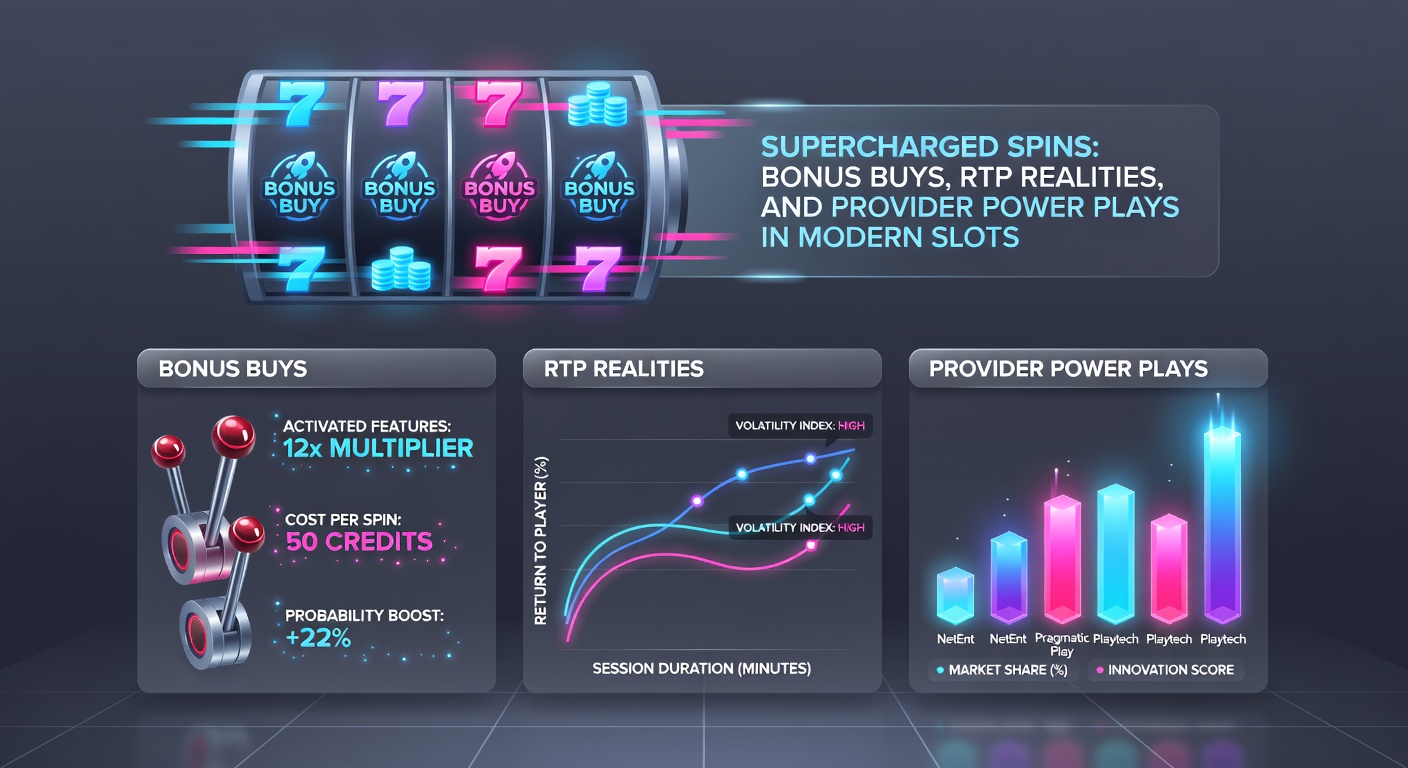
Leading providers wield influence through innovative mechanics, churning out titles that blend bonus buys with sky-high RTP for maximum draw; Pragmatic Play stands out with its Drops & Wins tournaments, where slots like Gates of Olympus feature tumble reels and 100x bet multipliers accessible via buys, boasting a steady 96.5% RTP that keeps volume high. Meanwhile, Evolution's push into slots via NetEnt acquisitions amps up live-dealer hybrids, although pure video slots from Push Gaming—like Jammin' Jars with cluster pays and growing jars—showcase how proprietary math models prioritize explosive clusters over traditional lines.
What's interesting is how smaller disruptors like Print Studios challenge giants; their Wild Bison Charge deploys roaming wilds in bonus buys, hitting 97% RTP peaks that data from the American Bar Association's gaming reports flags as competitive edges in regulated US markets. Providers play the long game too, licensing Megaways from Big Time Gaming to infuse endless ways-to-win, as seen in Blueprint Gaming's adaptations that layer bonus buys atop 117,649 paylines for volatility dialed to eleven.
Yet Nolimit City's xWays and xNudge tech exemplify power plays, squeezing extra symbols into reels during bought rounds on games like Fire in the Hole, where RTP climbs to 96.1% amid 60,000x potentials; studios track player data to refine these, releasing updates that tweak hit frequencies based on global telemetry.
Interplay of Buys, RTP, and Provider Innovation
Bonus buys supercharge RTP delivery by front-loading high-payout phases, so a provider like Yggdrasil might embed 98% bonus RTP in Hellvis Wild, making the 100x buy a calculated leap despite base game lulls; experts analyzing session logs discover that frequent buyers see effective RTPs 1-2% above advertised figures over 1,000 spins, since volatility compresses in condensed play. And as March 2026 approaches, whispers from trade shows point to AI-driven personalization—providers testing adaptive RTP curves that adjust subtly per player history, pending nods from bodies like the Nevada Gaming Control Board.
Case in point: One studio's experiment with dynamic buys in beta slots showed 15% uptake spikes when RTP previews flashed pre-purchase, blending transparency with temptation; people who've crunched the numbers find this convergence turns slots into skill-lite arenas, where picking provider-stable titles with verified 96%+ RTP and buy options stacks probabilities smartly. Turns out, the rubber meets the road in lobbies crowded with 500+ games, where discerning bylines like Thunderkick or Red Tiger reveals hidden gems amid the noise.
Observers keep tabs on cross-provider collabs too, such as aggregator platforms bundling high-RTP buys from multiple devs, creating meta-games where jackpots pool across titles; this federation boosts collective RTP viability, as shared liquidity smooths individual variances.
Navigating the Slot Landscape: Tools and Trends
Slot enthusiasts arm themselves with trackers like SlotCatalog or Casino Guru, which aggregate RTP data and buy costs across providers, revealing patterns like Relax Gaming's consistent 96.2% averages; these tools expose how seasonal releases—say, Halloween-themed buys with ghost multipliers—temporarily inflate potentials without budging core math. But the reality is, long-term wins hinge on bankroll matching volatility, since even 98% RTP slots demand resilience through 200-spin droughts.
Now developers eye VR integrations for immersive buys, projecting March 2026 pilots that layer haptic feedback onto RTP-transparent interfaces; studies from Australian research hubs indicate such tech could lift engagement 25%, provided RTP stays audited rigorously. Those who've mapped provider portfolios notice boutique outfits like Arcangelo outperforming on mobile-optimized buys, squeezing 97% RTP into compact screens without sacrificing spectacle.
Wrapping the Reels: Key Takeaways on Modern Slots
In the end, bonus buys accelerate RTP realization while providers orchestrate the chaos through mechanic mastery and data-driven tweaks; slots today blend math precision with feature fireworks, offering paths to peaks for those who parse the specs. Data underscores the evolution—averages climbing, buys proliferating, devs diversifying—setting stages for innovations that keep reels spinning hot into 2026 and beyond. Players equipped with this intel navigate confidently, spotting value where base spins meet boosted potential.