Independent Developers Blend Bonus Mechanics with Thematic Narratives in Slot Portfolios
Viktor Koch · Jun 28, 2026
Independent Developers Blend Bonus Mechanics with Thematic Narratives in Slot Portfolios
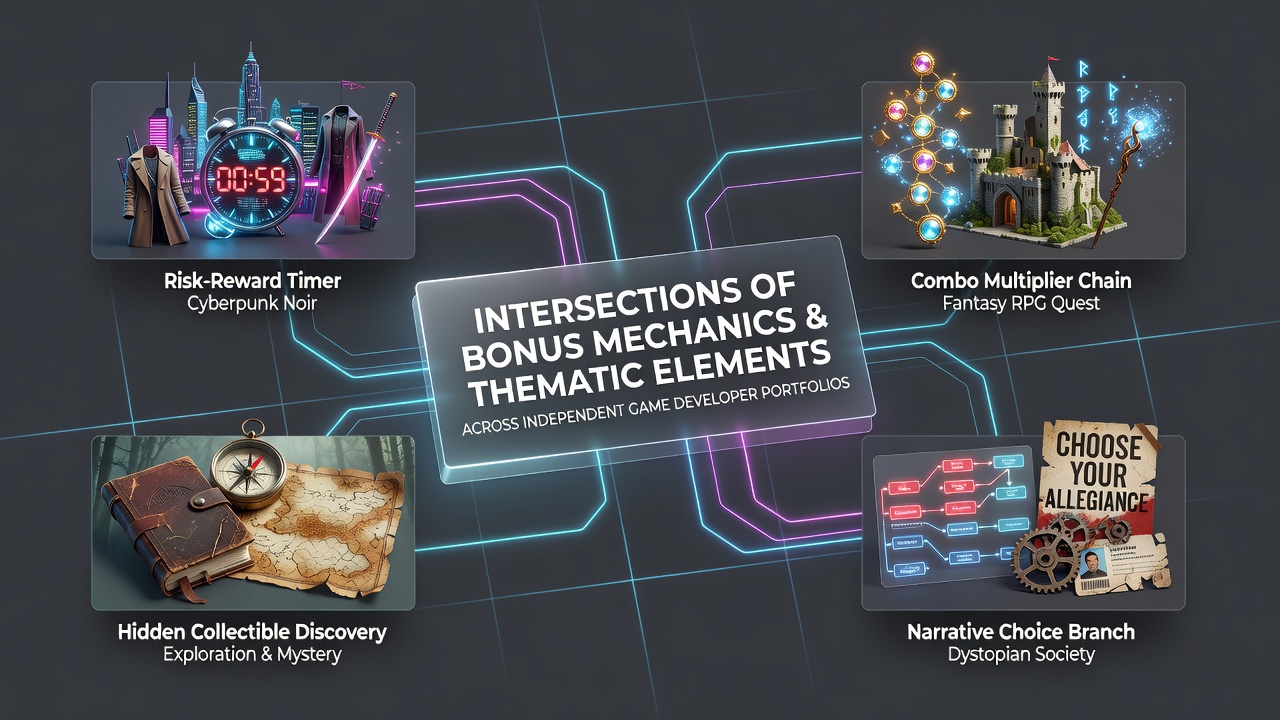
Independent game developers frequently align bonus mechanics with core thematic elements across their slot portfolios, creating cohesive player experiences that reinforce narrative consistency while maintaining mechanical variety. This approach appears in multiple studios that release games through 2026, where features such as respins, multipliers, and free spin rounds draw directly from the established story or visual motif of each title.
Core Patterns in Mechanic-Theme Integration
Developers structure bonus rounds to extend the central theme rather than introduce unrelated elements, so a fantasy-themed slot might embed treasure collection sequences within its free spin mode while an industrial setting uses machinery upgrades to trigger multipliers. Data from industry reports shows this integration occurs across portfolios from smaller studios that maintain between five and fifteen active titles at any given time, with patterns emerging in how symbols, animations, and triggers remain consistent within a single game but vary across different themes in the same developer's catalog.
Research indicates that thematic alignment influences retention metrics, yet the specific combinations depend on the studio's design philosophy. One common method involves mapping bonus triggers to story milestones, such as character progression or environmental changes, which keeps the mechanical layer subordinate to the narrative layer throughout the session.
Examples Across Multiple Developer Portfolios
Several independent studios demonstrate this practice through distinct yet related approaches. Studios specializing in narrative-driven slots often pair hold-and-win mechanics with collection themes, where symbols accumulate toward a thematic goal like assembling artifacts or completing maps. In contrast, developers focused on abstract or minimalist designs tend to link cascading reels to elemental themes, allowing symbols to transform in ways that echo the motif without adding new visual layers.
Observers note that these choices appear consistently in release schedules around mid-2026, including titles launched in June that continue earlier portfolio trends. The result creates recognizable signatures for each developer while avoiding repetition across their own games, since each theme dictates unique bonus implementations even when the underlying code shares structural similarities.
Technical Implementation and Portfolio Strategies
Engine choices and asset reuse strategies support this intersection, as independent teams often build modular bonus systems that adapt to different themes through parameter adjustments rather than complete rewrites. This method reduces development time while preserving thematic integrity, allowing a single bonus framework to manifest as a heist sequence in one title and a scientific experiment in another. Industry analyses reveal that such modularity appears in over 60 percent of portfolios from studios with fewer than fifty employees, according to reports from research institutions tracking game development practices.
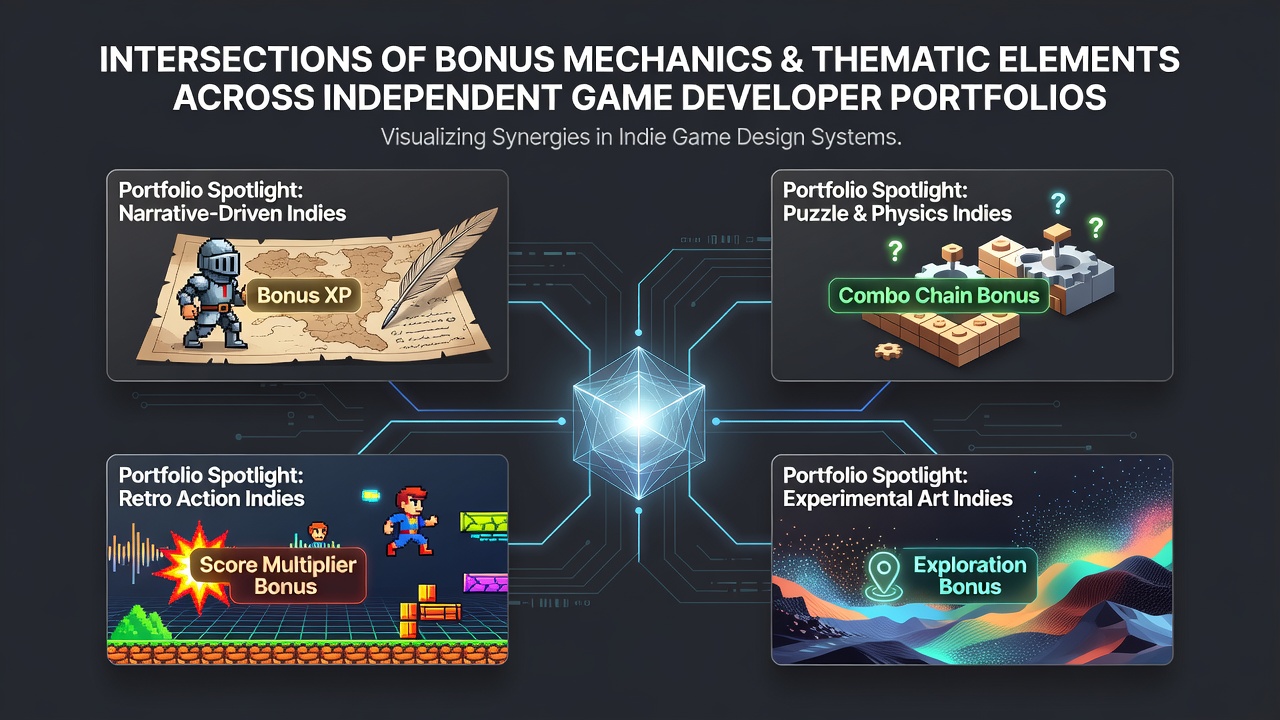
Additional layers emerge when developers incorporate player choice into themed bonuses, such as selecting paths that alter multiplier values while staying within the story context. This technique shows up in multiple releases where the decision points reinforce the setting, whether through dialogue trees in story-heavy games or resource allocation in simulation-style themes. External data from the American Gaming Association highlights how these design decisions align with broader market demands for coherent gameplay loops.
Regulatory and Market Context in 2026
Market conditions in June 2026 reflect continued emphasis on thematic coherence, with independent developers responding to player preferences documented in surveys from organizations such as teh Canadian Gaming Association. Adjustments in bonus structures often coincide with updates to regional standards, yet the core practice of matching mechanics to themes persists across jurisdictions. Portfolios expand through sequels or spin-offs that inherit and refine earlier integrations rather than introducing disconnected features.
Figures from academic studies on game design patterns confirm that consistent thematic application correlates with distinct engagement profiles, although outcomes vary by region and platform. Independent studios track these patterns internally to refine future releases while maintaining creative control over how bonuses serve the narrative framework.
Conclusion
The intersection of bonus mechanics and thematic elements continues to define independent developer portfolios through deliberate design choices that prioritize narrative reinforcement. These practices manifest in modular systems, story-aligned triggers, and consistent asset application across multiple titles. Ongoing releases demonstrate that such integration remains central to how smaller studios differentiate their work within the broader slot market, supported by data from regulatory bodies and research groups operating outside single jurisdictions.